






Can QiWei WGZ-1B Measure Wastewater Turbidity? Selection Guide Malaysia

Can QiWei WGZ-1B Measure Wastewater Turbidity Malaysia?
Can the QiWei WGZ-1B be used to measure industrial wastewater?
The answer depends on three important factors:
Whether the required parameter is turbidity in NTU
Whether the expected reading is within 0–200 NTU
Whether the measurement is for routine internal monitoring or a specified compliance method
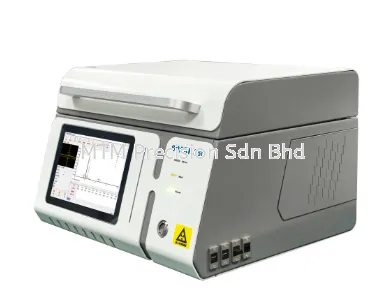
The QiWei WGZ-1B Portable Turbidity Meter can be used for clear to moderately turbid wastewater samples within its stated range. It is not a universal solution for heavy wastewater, sludge or suspended-solids testing.
⭐ QiWei WGZ-1B Main Specifications
Measurement parameter: Turbidity
Measuring unit: NTU
Measuring range: 0–200 NTU
Minimum display: 0.1 NTU
Measurement principle: 90° scattered light
Repeatability: ≤1%
Zero drift: ±1%
Power supply: 5 × AA batteries or AC adapter
LCD display
Automatic power-off
Portable carrying case
Sample vials and Formazine turbidity standard included
✅ When Can WGZ-1B Be Used for Wastewater?
The WGZ-1B may be suitable when:
The required result is turbidity in NTU
Expected turbidity is below 200 NTU
The sample is clear to moderately cloudy
The user needs routine spot measurements
The purpose is internal process monitoring
Water is being checked before and after filtration
The operator needs to compare treatment stages
A portable instrument is preferred
Typical applications may include treated effluent, process-water discharge, filtered wastewater and water-treatment troubleshooting.
❌ When Is WGZ-1B Not Suitable?
Choose another instrument or method when:
The required result is SS or TSS in mg/L
Expected turbidity exceeds 200 NTU
The sample contains heavy sludge
Large particles settle rapidly
Continuous online monitoring is required
A particular regulatory method is specified
The customer requires automated data logging
The sample is strongly coloured or opaque
Very low-level turbidity requires specialised performance
🔍 Turbidity vs Suspended Solids in Wastewater
This is the most important distinction when selecting an instrument.
RequirementCorrect DirectionWater cloudiness in NTUTurbidity meterSuspended solids in mg/LSuspended solids meter or required laboratory methodHeavy sludge measurementDedicated sludge or solids instrumentContinuous process readingOnline sensorPortable NTU spot checkQiWei WGZ-1B, within 0–200 NTUFormal TSS reportingConfirm the specified reference method
The WGZ-1B measures how particles scatter light. It does not directly weigh or report suspended solids in mg/L.
⚠️ Can NTU Be Converted to mg/L?
NTU cannot be converted universally into mg/L.
The relationship changes according to:
Particle size
Particle shape
Particle colour
Material density
Organic content
Sample colour
Treatment process
Light-scattering properties
A site-specific relationship may sometimes be established using representative samples and an accepted reference method, but one general conversion formula should not be used for every type of wastewater.
🏭 Possible Wastewater Sampling Points
The WGZ-1B may be used to compare turbidity at:
Incoming process water
Equalisation tank outlet
After settling
Before filtration
After filtration
Treated-water tank
Final internal monitoring point
Recycled-water outlet
Cooling-water discharge
Different treatment stages
Sampling locations should be selected according to the treatment process and the facility’s monitoring procedure.
📊 Example: Before and After Filtration
A maintenance team wants to check whether filtration reduces wastewater turbidity.
Sampling PointExample ResultBefore filtration86.4 NTUAfter filtration19.7 NTUTreated-water tank16.2 NTU
These are example readings only. They show how the meter may be used to compare different treatment stages.
Acceptance limits must follow the facility’s procedure and applicable requirements.
🧪 How to Measure Wastewater Turbidity
Step 1: Collect a Representative Sample
Collect the sample from the defined location using a clean container.
Step 2: Mix the Sample Consistently
Wastewater particles may settle quickly. Mix gently and consistently without creating air bubbles.
Step 3: Rinse the Vial
Rinse the sample vial with the water being tested.
Step 4: Fill Carefully
Avoid splashing and bubble formation.
Step 5: Inspect the Sample
Check whether the sample contains large particles, foam, oil or heavy sludge that may interfere with measurement.
Step 6: Clean the Vial Exterior
Remove water droplets, fingerprints and residue using a lint-free cloth.
Step 7: Measure Promptly
Measure within a consistent period after mixing to reduce variations caused by particle settling.
Step 8: Record the Result
Record the reading in NTU together with the sampling point, time and process condition.
🫧 Wastewater Measurement Challenges
Air Bubbles
Aeration systems and pumps may introduce bubbles that increase the displayed reading.
Settling Particles
Heavy particles may settle rapidly, causing readings to decrease between measurements.
Sample Colour
Strong colour may affect optical measurements depending on the instrument and method.
Oil and Grease
Oil may coat the vial or create an uneven sample.
Foam
Foam may interfere with sample preparation and repeatability.
Large Particles
Large solids may produce unstable readings and may not remain evenly distributed.
Vial Contamination
Wastewater residue can remain on the vial and affect the next measurement.
🔄 How to Improve Repeatability
For more consistent measurements:
Use the same sampling point
Use the same sampling depth
Follow the same mixing method
Measure after the same waiting time
Remove air bubbles
Use clean, undamaged vials
Keep the vial orientation consistent
Record the sample condition
Rinse equipment between samples
Verify the instrument using suitable standards
Wastewater samples naturally vary, so the sample itself may cause more variation than the instrument.
📈 What If the Reading Exceeds 200 NTU?
The WGZ-1B has a maximum stated range of 200 NTU.
If the sample is above range:
Do not report an estimated value
Do not assume the maximum display is the actual result
Consider a higher-range turbidity meter
Consider a suspended-solids meter
Use dilution only when permitted by a validated procedure
Send the sample for appropriate laboratory testing when necessary
For customers regularly measuring highly turbid water, selecting a higher-range instrument is usually more practical than repeatedly diluting samples.
🧴 Cleaning After Wastewater Testing
Wastewater may leave residue inside or outside the vial.
After measurement:
Dispose of the sample appropriately.
Rinse the vial immediately.
Clean it using a suitable non-abrasive procedure.
Inspect for stains and scratches.
Dry the vial before storage.
Clean any spill around the instrument.
Keep the measuring chamber dry.
Store the meter in its carrying case.
Do not allow wastewater to dry inside the sample vial.
🛠️ Using Turbidity Trends for Troubleshooting
Routine turbidity readings can support investigation of:
Filter breakthrough
Poor settling
Changes in chemical dosing
Increased incoming contamination
Tank disturbance
Inadequate backwashing
Damaged filter media
Treatment-process instability
Contamination after filtration
Unexpected changes in final water clarity
A turbidity result indicates a change but does not identify the exact contaminant.
📋 Information Required Before Recommending WGZ-1B
When requesting a quotation, provide:
Industry and application
Type of wastewater
Expected NTU range
Required measurement unit
Sampling location
Testing frequency
Internal monitoring or formal reporting
Applicable test method
Certificate requirement
Delivery location
If the customer only says, “I need a wastewater meter,” more application information is required before selecting a model.
✅ Simple Selection Guide
Choose QiWei WGZ-1B when:
You need portable turbidity readings in NTU
The expected range is 0–200 NTU
The sample is clear to moderately turbid
Routine spot checking is required
Choose a suspended-solids meter when:
The required result is SS or TSS in mg/L
Wastewater contains measurable suspended particles
The application specifically requests solids concentration
Choose a higher-range turbidity meter when:
Samples regularly exceed 200 NTU
Highly turbid water must be measured without routine dilution
Choose an online instrument when:
Continuous process monitoring is required
The measurement must be transmitted to a control system
📍 Wastewater Testing Instrument Supplier Malaysia
MTM Precision supplies water-quality testing instruments for factories, wastewater-treatment operators, environmental contractors, laboratories and maintenance companies throughout Malaysia.
Available categories include:
Turbidity meters
Suspended-solids meters
pH meters
Conductivity and TDS meters
Salinity meters
Dissolved oxygen meters
ORP meters
Residual chlorine meters
Multiparameter water-quality instruments
We support customers in Selangor, Kuala Lumpur, Johor, Penang, Perak, Melaka, Negeri Sembilan, Pahang, Kedah, Perlis, Terengganu, Kelantan, Sabah and Sarawak.
📞 Contact MTM Precision
MTM Precision Sdn Bhd
Tel / WhatsApp: +6016-660 7346
Office: +603-8080 7172
Email: mtmpre@yahoo.com
Website: www.mtmpre.com.my
Showroom & Service Centre:
No. 29-1 & 29-2, Jalan Bandar 18,
Pusat Bandar Puchong,
47160 Puchong, Selangor, Malaysia.
Send us your required unit, expected range and wastewater application. MTM Precision will help determine whether the QiWei WGZ-1B, a higher-range turbidity meter or a suspended-solids meter is the correct choice.
16 Sep 2026
