






Linshang LS173 Colorimeter for Food Packaging and Consumer Product Color QC Malaysia

Linshang LS173 Colorimeter for Food Packaging and Consumer Product Color QC Malaysia
For consumer products, color is often one of the first quality characteristics a customer notices. Packaging, labels, plastic containers and other suitable colored components may all need to remain consistent from one production batch to another.
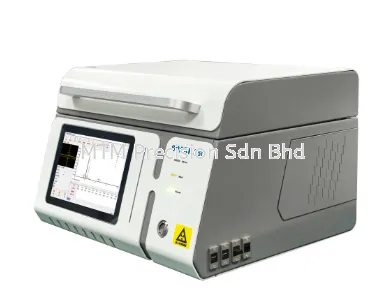
The Linshang LS173 Portable Colorimeter provides manufacturers and quality control teams with an objective method for measuring suitable product colors and comparing production samples against an approved reference.
For food packaging and consumer product manufacturers in Malaysia, the LS173 can support incoming quality control, supplier comparison, production monitoring and final color inspection.
Why Does Packaging Color Consistency Matter?
Consumers recognize products partly through their packaging.
If the same product appears on a retail shelf with noticeably different packaging colors, customers may wonder whether:
The product is from a different batch
The packaging has changed
The product is old
One package is defective
The product is genuine
Even when there is nothing wrong with the contents, inconsistent packaging can affect perceived product quality.
Common Packaging Color Problems
Manufacturers may encounter:
Different shades between carton batches
Label color variation
Plastic packaging color differences
Supplier-to-supplier variation
Repeat-order printing differences
Brand color inconsistency
Color changes during production
These differences may be difficult to quantify with visual inspection alone.
Using an Approved Packaging Master
A practical QC system begins with an approved reference.
This might be:
Customer-approved packaging
Golden sample
Approved carton
Master label
Standard plastic container
Approved printed sample
Brand color reference sample
Future production can then be compared against the same master.
For example:
Approved Master → Production Batch A
Approved Master → Production Batch B
Approved Master → Production Batch C
This provides a consistent basis for comparison over time.
What Is Delta E?
Delta E (ΔE) represents the measured difference between two colors.
In general:
Lower ΔE = smaller measured color difference
Higher ΔE = greater measured color difference
This gives QC teams a numerical way to evaluate how closely a suitable packaging or product sample matches the approved reference.
The acceptable Delta E tolerance should be established according to the material, application, customer requirement and internal quality specification.
There is no single Delta E pass/fail value suitable for every packaging product.
Incoming Packaging Quality Control
Many manufacturers outsource their printing and packaging production.
When a new shipment arrives, incoming QC can inspect samples before releasing the materials for packing.
A possible workflow is:
Receive Packaging → Sampling → Visual Inspection → Color Measurement → Compare with Master → Accept / Hold / Investigate
Detecting a color issue at this stage may prevent incorrect packaging from being used on finished products.
Supplier-to-Supplier Packaging Comparison
Companies may use more than one packaging supplier to maintain supply continuity.
However, different printers or packaging manufacturers may produce slightly different results.
Rather than comparing suppliers directly with one another:
Approved Master → Supplier A
Approved Master → Supplier B
Approved Master → Supplier C
Each supplier can be evaluated against the same reference.
This provides a more consistent approach to supplier quality management.
Plastic Container and Housing Color Inspection
Consumer products frequently use colored plastic components.
Examples may include suitable:
Plastic containers
Caps
Covers
Product housings
Packaging components
Molded accessories
Color variation may arise from resin, pigment, masterbatch or processing differences.
The LS173 can support comparison of suitable plastic components against an approved master.
Production Color Monitoring
Color quality should not necessarily be checked only at the end of production.
For longer manufacturing runs, samples can be measured periodically.
For example:
First-Off Sample → Measure
Mid-Production Sample → Measure
Final Sample → Measure
If color begins moving away from the approved standard, the production team can investigate earlier.
Final Product Color Inspection
Before shipment, suitable finished products or packaging can be checked again.
A final QC process may combine:
Visual Inspection + LS173 Color Measurement
Visual inspection evaluates overall appearance, while instrumental measurement provides objective color comparison data.
This creates a stronger final quality control process.
Why Visual Inspection Alone Can Be Difficult
Human color judgement is influenced by:
Lighting
Viewing conditions
Background colors
Inspector experience
Eye fatigue
Individual perception
For example, a packaging sample may appear acceptable under warehouse lighting but look noticeably different when displayed under retail lighting.
Instrumental measurement helps provide a consistent reference under controlled measurement conditions.
D/8 Measurement Geometry
The Linshang LS173 uses D/8 optical geometry, referring to diffuse illumination with an 8-degree viewing geometry.
Controlled optical measurement helps improve repeatability when suitable samples are compared by different operators or at different times.
This is useful for companies managing repeated packaging orders throughout the year.
Repeat Orders and Long-Term Color Consistency
Consider a consumer product manufacturer ordering packaging every three months:
January → Batch 1
April → Batch 2
July → Batch 3
October → Batch 4
If every new batch is compared only with the immediately previous batch, small color changes may gradually accumulate.
Using one controlled master provides a more stable long-term reference.
Brand Color Quality Control
Brand colors can appear across many components:
Cartons
Labels
Plastic packaging
Product housings
Promotional materials
When these items come from different suppliers, maintaining a consistent appearance can be challenging.
Objective color measurement can provide additional data when evaluating suitable brand-colored samples.
Colorimeter vs Gloss Meter
Color is only one part of appearance.
Two packaging or plastic samples can have similar colors but different gloss.
A colorimeter evaluates color and color difference.
A gloss meter evaluates surface gloss.
If both characteristics are important to the finished product, separate measurements may be required.
Reducing Packaging Rejection
A color problem discovered before packaging is used may involve only the packaging supplier.
The same problem discovered after products have already been packed can involve:
Finished goods
Labor
Packaging material
Repacking
Sorting
Production delays
Replacement costs
Early incoming and production inspection can therefore reduce the impact of a color-related non-conformance.
Customer Complaint Investigation
Suppose a customer reports:
“The latest packaging looks different from the previous batch.”
If the manufacturer has an approved master, retained samples and measurement records, investigating the complaint becomes easier.
The company can compare:
Master Sample
Previous Batch
Current Batch
Customer Sample
Objective measurement does not replace the full investigation, but it provides useful technical information.
Who Can Consider the Linshang LS173?
Potential users may include:
Food packaging manufacturers
Consumer product manufacturers
Plastic packaging manufacturers
Printing companies
Label manufacturers
Brand owners
QA and QC departments
Incoming inspection teams
Supplier quality engineers
Production departments
The suitability of the instrument should always be evaluated according to the actual sample and measurement requirements.
Building a Packaging Color QC Procedure
A documented procedure can define:
Approved master sample
Measurement location
Sampling quantity
Number of measurements
Required color parameters
Acceptance criteria
Inspection frequency
Measurement records
Retained sample requirements
Non-conformance action
This helps different operators follow the same color inspection method.
Linshang LS173 for Packaging Color QC Malaysia
MTM Precision supplies industrial testing and measurement instruments for manufacturing, engineering and quality control applications throughout Malaysia.
If your company needs a portable colorimeter for food packaging color inspection, consumer product QC, Delta E measurement, supplier comparison or batch color consistency, contact MTM Precision to discuss your application.
Contact MTM Precision
MTM Precision Sdn. Bhd.
Showroom & Service Centre
No. 29-1 & 29-2, Jalan Bandar 18,
Pusat Bandar Puchong,
47160 Puchong, Selangor, Malaysia
🌐 Website: www.mtmpre.com.my
📧 Email: mtmpre@yahoo.com
📱 WhatsApp: +6016-660 7346
Looking for a Linshang LS173 Portable Colorimeter for packaging and consumer product color QC in Malaysia? Contact MTM Precision for quotation, product information and application enquiries.
12 Aug 2026


