





UV Energy Meter for UV Adhesive Curing – Linshang LS137 Malaysia

UV Energy Meter for UV Adhesive Curing – Linshang LS137 Malaysia
UV adhesive is widely used in modern manufacturing because it can provide fast curing, controlled production cycles and efficient bonding for precision components.
However, successful UV adhesive curing depends on more than simply switching on a UV LED lamp for a few seconds.
The adhesive must receive the appropriate UV exposure under controlled process conditions.
If UV irradiance, accumulated UV energy, exposure time or working distance changes, the final bond may also change.
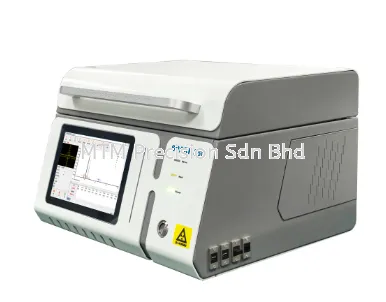
The Linshang LS137 UV Energy Meter is designed for UV LED curing systems and can measure UV irradiance, accumulated UV energy, exposure duration and temperature.
For manufacturers using UV adhesives in Malaysia, it can provide useful data for process setup, validation, quality control and troubleshooting.
Why Measure UV During Adhesive Curing?
A typical UV adhesive process may look simple:
Apply Adhesive → Position Component → Expose to UV → Cure
But several variables affect what actually happens during UV exposure.
These can include:
UV wavelength
UV irradiance
UV energy
Exposure duration
Distance from UV source
Adhesive thickness
Adhesive formulation
Component geometry
Substrate transmission
Process temperature
If any of these variables changes, curing performance may also change.
What Happens When UV Adhesive Is Not Properly Cured?
Depending on the adhesive and application, insufficient or inconsistent curing may contribute to:
Weak bonding
Tacky adhesive
Incomplete cure
Reduced bond strength
Longer production time
Inconsistent product quality
Increased rejection
Premature bond failure
These symptoms do not automatically mean that the adhesive itself is defective.
The UV curing process should also be evaluated.
UV Lamp ON Does Not Mean the Process Is Controlled
An operator may confirm:
“The UV LED is ON.”
The machine may also display:
UV Power = 80%
But this does not directly tell the process engineer:
Actual UV irradiance at the bonding area
Peak UV irradiance
Total accumulated UV energy
Actual exposure duration
For quality-critical adhesive processes, independent measurement can provide more useful information.
What Does Linshang LS137 Measure?
The Linshang LS137 can measure:
UV Energy
UV Irradiance
Peak UV Irradiance
Measurement Duration
Temperature
Maximum Temperature
These values can be recorded alongside adhesive-bonding results to establish a known-good production condition.
UV Irradiance vs UV Energy
The distinction is particularly important for UV adhesive curing.
UV Irradiance
This describes the strength of UV radiation at a particular moment.
Common unit:
mW/cm²
UV Energy
This represents accumulated UV exposure during the curing period.
Common unit:
mJ/cm²
A UV adhesive process may require both adequate irradiance and sufficient total exposure.
Why Exposure Time Matters
Consider two curing cycles using the same UV LED source.
Process A
Exposure time:
5 seconds
Process B
Exposure time:
2 seconds
If other conditions remain similar, Process B generally provides less accumulated UV exposure.
Therefore, reducing cycle time to increase production capacity can affect curing.
This should be measured and validated rather than assumed.
Example: Production Wants a Faster Cycle
An electronics factory cures a UV adhesive for 6 seconds.
The process is stable.
Management wants higher output and asks engineering to reduce curing time to 4 seconds.
Instead of simply changing the timer and checking whether the adhesive feels dry, the process engineer can compare:
Peak UV irradiance
Accumulated UV energy
Exposure duration
Bond test results
This provides a stronger basis for approving the faster cycle.
Working Distance Is Important
The distance between the UV LED source and bonding area can affect irradiance at the adhesive.
Distance may change because of:
Different component height
New fixture
Different jig
Machine adjustment
UV head repositioning
Product redesign
If the distance changes, measure the UV conditions again.
Example: New Fixture
A production line has been curing successfully for months.
Engineering introduces a new fixture.
The fixture positions the product slightly farther from the UV LED source.
Machine power and curing time remain unchanged.
However, actual UV irradiance at the adhesive may now be different.
This is why fixture changes should be considered during UV process verification.
Component Geometry Can Create Challenges
Precision assemblies are not always flat.
The adhesive may be located:
Inside a recess
Near an edge
Under a transparent component
Between two components
At an angle to the UV source
The actual UV exposure at the adhesive location may differ from the output directly underneath the lamp.
Process engineers should consider the real geometry of the assembly when developing the curing process.
Transparent Materials Can Affect UV Exposure
Some UV adhesive applications cure through:
Glass
Clear plastic
Optical components
Transparent covers
The transmission characteristics of these materials can affect how much UV reaches the adhesive.
A transparent material to visible light does not automatically transmit every UV wavelength equally.
This should be considered during process development.
UV Wavelength and Adhesive Compatibility
UV adhesive formulations are designed to respond to particular wavelength ranges.
Common industrial UV LED wavelengths can include:
365 nm
385 nm
395 nm
405 nm
The UV source should be suitable for the adhesive manufacturer's curing requirements.
The measuring instrument should also be appropriate for the actual UV source.
LS137 Spectral Response
The Linshang LS137 is designed for UV LED curing sources.
Its spectral response is approximately:
340–420 nm
and it is calibrated using a:
395 nm UV LED source
This makes it particularly relevant for modern UV LED curing applications, especially systems using 395 nm UV LED technology.
High-Intensity UV LED Measurement
Industrial UV LED curing sources can produce high irradiance.
The LS137 supports UV irradiance measurement up to:
40,000 mW/cm²
This makes it suitable for many high-intensity industrial UV LED curing applications within its specified operating conditions.
Establish a Known-Good Adhesive Curing Baseline
When the bonding process is performing well, record the curing conditions.
For example:
Product:
Adhesive:
UV wavelength:
UV power setting:
Working distance:
Peak UV irradiance:
Accumulated UV energy:
Exposure duration:
Maximum temperature:
Bond-strength result: PASS
This becomes the reference for future production.
Use Bond Testing Together with UV Measurement
A UV energy meter does not replace product testing.
The best approach is:
Measure UV Conditions + Test Bond Performance
Depending on the product, quality checks may include:
Pull test
Shear test
Peel test
Visual inspection
Functional test
Customer-specific acceptance criteria
The objective is to connect measured curing conditions with successful product performance.
Troubleshooting Weak UV Adhesive Bonds
Suppose bond strength suddenly decreases.
Use a structured approach.
Check 1 – UV Output
Has peak UV irradiance changed?
Check 2 – UV Energy
Is accumulated UV energy lower than the known-good baseline?
Check 3 – Exposure Time
Has the curing cycle been shortened?
Check 4 – Working Distance
Has the product or UV head position changed?
Check 5 – UV Source Condition
Are optical surfaces clean and is the cooling system operating correctly?
Check 6 – Adhesive
Has the adhesive batch, storage condition or application thickness changed?
Check 7 – Surface Preparation
Are the bonding surfaces properly prepared?
This prevents the team from blaming the UV LED source or adhesive without evidence.
What If UV Energy Is Lower Than Normal?
Investigate:
UV LED output
UV power setting
Working distance
Exposure time
Optical contamination
Cooling performance
Machine configuration
After corrective action:
Measure again → Cure sample → Test bond
What If UV Measurements Are Normal?
If current UV measurements remain consistent with the known-good process, investigate other variables such as:
Adhesive condition
Adhesive storage
Dispensing quantity
Bond-line thickness
Surface contamination
Component material
Component positioning
This can prevent unnecessary changes to a UV curing system that is operating normally.
Monitor UV LED Output Over Time
For important bonding applications, periodic UV measurement can be incorporated into preventive process checks.
For example:
New UV LED → Establish Baseline
Periodic Check → Compare
Significant Change → Investigate
Maintenance → Measure Again
This helps identify gradual changes before they become major production problems.
Measure After UV LED Replacement
When a UV LED module is replaced, establish a new measurement reference.
Record:
Peak UV irradiance
UV energy
Exposure duration
Maximum temperature
Then verify the adhesive bond using the required quality test.
The new readings become the baseline for future checks.
Applications in Electronics Manufacturing
UV adhesive curing is commonly encountered in precision manufacturing environments.
Potential applications include:
Electronic component bonding
PCB assembly
Connector assembly
Sensor manufacturing
Display assembly
Camera-module production
Optical component bonding
Precision device assembly
The exact curing requirements depend on the adhesive and product.
Applications in Optical Manufacturing
UV adhesives are also useful for optical assemblies because they can provide controlled bonding with fast curing.
Potential applications include:
Lens bonding
Optical components
Glass assembly
Sensor windows
Precision optical devices
In these applications, repeatable UV exposure can be particularly important.
LS137 vs LS136 for Adhesive Curing
Identify the UV source before selecting the meter.
UV LED Adhesive Curing
Consider:
Linshang LS137
Traditional High-Pressure Mercury UV Curing
Consider:
Linshang LS136
The measurement instrument should match the curing source technology.
Who Can Use LS137 for UV Adhesive Curing?
Potential users include:
Process Engineers
Manufacturing Engineers
QA Engineers
QC Technicians
Maintenance Engineers
R&D Engineers
Electronics Manufacturers
Precision Assembly Companies
It can support both new-process development and ongoing production monitoring.
Don't Control Adhesive Curing by Time Alone
A curing SOP may say:
Expose for 5 seconds.
But exposure time alone does not define the complete UV process.
A stronger production reference considers:
UV Wavelength + Irradiance + Energy + Exposure Time + Working Distance + Product Result
This provides a more complete picture of the curing condition.
A Better UV Adhesive Curing Strategy
Instead of:
Set Timer → Switch On UV → Assume Adhesive Is Cured
consider:
Confirm UV Source → Measure Exposure → Validate Bond → Establish Baseline → Monitor → Verify After Changes
This helps transform UV adhesive curing into a measurable and repeatable manufacturing process.
Looking for a UV Energy Meter for UV Adhesive Curing in Malaysia?
MTM Precision supplies industrial testing and measurement instruments for electronics, manufacturing, engineering, maintenance and QA/QC applications in Malaysia.
If your company uses UV adhesive curing, provide us with:
UV wavelength
UV LED source model
Adhesive type
Curing machine model
Exposure time
Expected UV intensity
Application
We can assist you in determining whether the Linshang LS137 UV Energy Meter is suitable for your UV adhesive curing process.
Contact MTM Precision
MTM Precision Sdn. Bhd.
Showroom & Service Centre
No. 29-1 & 29-2, Jalan Bandar 18,
Pusat Bandar Puchong,
47160 Puchong, Selangor, Malaysia
🌐 Website: www.mtmpre.com.my
📧 Email: mtmpre@yahoo.com
📱 WhatsApp: +6016-660 7346
Contact MTM Precision for Linshang LS137 UV Energy Meter enquiries, UV adhesive curing applications, model selection, technical information and quotation in Malaysia.
13 Aug 2026


