





Which Water Quality Meters Are Needed for Industrial Effluent Malaysia

Which Water Quality Meters Are Needed for Industrial Effluent Malaysia?
Industrial effluent cannot usually be evaluated using only one water-quality parameter.
Factories may need to monitor suspended solids, turbidity, pH, conductivity, TDS, dissolved oxygen and other application-specific parameters.
The correct combination depends on the production process, treatment system and purpose of the results.
Quick Water-Quality Parameter Guide
ParameterWhat It IndicatesCommon UnitTypical InstrumentSuspended solidsInsoluble particles in watermg/LSuspended-solids meterTurbidityWater cloudinessNTU or FNUTurbidity meterpHAcidity or alkalinitypHpH meterConductivityAbility to conduct electricityµS/cm or mS/cmConductivity meterTDSEstimated dissolved substancesppm or mg/LTDS meterDissolved oxygenOxygen dissolved in watermg/L or % saturationDO meterORPOxidation-reduction conditionmVORP meterSalinitySalt concentrationppt, PSU or other unitSalinity meterTemperatureWater temperature°CTemperature-capable meter
The required instrument should be selected based on the parameter and unit stated in the customer’s specification.
Suspended Solids
Suspended solids are insoluble particles carried within the water.
They may include:
Sediment
Organic matter
Biological solids
Food-processing residue
Industrial particles
Treatment-process solids
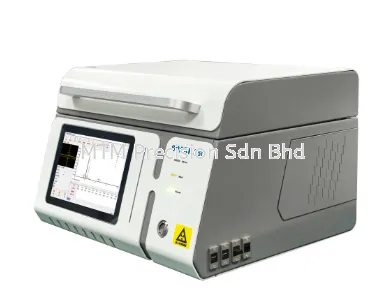
A portable instrument such as the Qiwei SS-500B Suspended Solids Meter provides readings from 0 to 500 mg/L.
It can support routine wastewater screening, treatment-stage comparison and field troubleshooting.
Turbidity
Turbidity indicates how cloudy water appears because of suspended particles.
It is normally reported in NTU or FNU.
Turbidity and suspended solids may be related, but they are not interchangeable. There is no universal formula for converting NTU directly into mg/L.
A facility may use both instruments when it requires water-clarity and particle-concentration information.
pH
pH affects many wastewater-treatment processes.
It may influence:
Chemical dosing
Coagulation and flocculation
Biological treatment
Corrosion
Precipitation
Final water condition
Customers should select between pen, portable, benchtop and online pH meters based on the application.
Conductivity
Conductivity indicates how easily water conducts electricity.
It is influenced by dissolved ions and is normally reported in µS/cm or mS/cm.
Conductivity monitoring may help identify changes in:
Chemical concentration
Process water
Rinse water
Dissolved salts
Treatment conditions
It does not directly measure suspended solids.
Total Dissolved Solids
TDS estimates the amount of dissolved substances present in the water.
A TDS meter commonly calculates the result from conductivity using a conversion factor.
TDS should not be confused with TSS or suspended solids.
TDS: Dissolved material
Suspended solids: Insoluble particles
Customers frequently request the wrong parameter because both terms contain the word “solids.”
Dissolved Oxygen
Dissolved oxygen is important in biological treatment, aquaculture and other water-management applications.
A DO meter may help operators evaluate:
Aeration
Biological activity
Oxygen transfer
Pond or tank conditions
Treatment-process changes
The correct range and sensor type depend on the application.
ORP
ORP indicates the oxidation-reduction condition of the water and is reported in millivolts.
It may support certain:
Disinfection processes
Biological-treatment stages
Chemical-treatment systems
Process-control applications
ORP is not a direct measurement of one specific chemical concentration.
Which Parameters Should a Factory Start With?
For general operational monitoring, a factory may begin by reviewing:
pH
Conductivity or TDS
Turbidity
Suspended solids
Temperature
Dissolved oxygen, where biological treatment is used
Additional parameters should be selected based on the process, consultant’s recommendation and reporting requirement.
Portable, Benchtop or Online?
Portable Instruments
Suitable for:
Multiple sampling points
Field work
Troubleshooting
Daily or weekly checks
Contractor site visits
Benchtop Instruments
Suitable for:
Controlled laboratory measurements
Frequent indoor testing
Sample preparation
More structured quality procedures
Online Instruments
Suitable for:
Continuous monitoring
Fixed process points
Alarm requirements
Control-system integration
Rapidly changing processes
Some facilities use all three types for different purposes.
How to Select the Correct Measuring Range
Review historical process and laboratory results.
Identify:
Minimum concentration
Normal concentration
Maximum expected concentration
Abnormal process condition
Sampling point
Treatment stage
The selected range should cover normal operation and reasonable process excursions.
For suspended-solids measurements, the SS-500B is suitable only when the expected result falls within 0–500 mg/L.
Operational Monitoring vs Compliance Testing
Portable water-quality meters are useful for:
Routine screening
Process comparison
Troubleshooting
Maintenance decisions
Trend monitoring
Selecting samples for laboratory analysis
Official reporting may require a recognised analytical method and accredited laboratory result.
Confirm the required procedure with the environmental consultant, laboratory, customer or relevant authority.
Build a Practical Instrument Set
A factory with a wastewater-treatment system may consider:
Portable pH meter
Conductivity or TDS meter
Turbidity meter
Suspended-solids meter
Dissolved-oxygen meter for biological treatment
Appropriate calibration standards
Clean sample containers
Measurement and maintenance records
The final selection should follow the facility’s actual process—not a generic package.
Information Required Before Quotation
Provide:
Industry and process
Sample type
Required parameters
Required units
Expected measurement ranges
Number of sampling points
Portable, benchtop or online requirement
Operational or compliance purpose
Calibration-report requirement
Available budget
This helps prevent purchasing several instruments that measure the wrong parameters.
About the Qiwei SS-500B
The Qiwei SS-500B Portable Suspended Solids Meter offers:
Measurement range: 0–500 mg/L
Displayed resolution: 1 mg/L
AC adaptor or AA-battery operation
Two measuring bottles
Portable field and indoor use
It can form part of a broader industrial-effluent monitoring setup alongside pH, conductivity, turbidity and dissolved-oxygen instruments.
Contact MTM Precision
For the Qiwei SS-500B Portable Suspended Solids Meter and industrial-effluent water-quality instrument selection, technical consultation or quotation, contact:
MTM Precision Sdn. Bhd.
Professional Test & Measurement Solutions Partner in Malaysia
Website: www.mtmpre.com.my
Email: mtmpre@yahoo.com
WhatsApp: +6016-660 7346
Showroom & Service Centre
No. 29-1 & 29-2, Jalan Bandar 18,
Pusat Bandar Puchong,
47160 Puchong, Selangor, Malaysia.
Malaysia Coverage:
Selangor, Kuala Lumpur, Johor, Penang, Melaka, Negeri Sembilan, Perak, Pahang, Kedah, Perlis, Terengganu, Sabah and Sarawak.
15 Sep 2026

