





Linshang LS173 Portable Colorimeter for Outgoing Quality Control OQC Malaysia

Linshang LS173 Portable Colorimeter for Outgoing Quality Control OQC Malaysia
The final quality inspection before shipment is one of the last opportunities for a manufacturer to identify a color problem before the product reaches the customer.
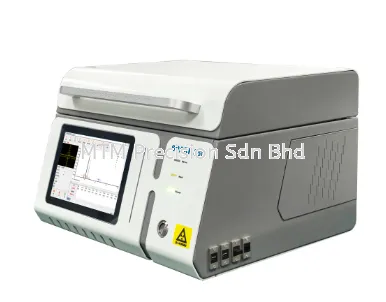
The Linshang LS173 Portable Colorimeter can support Outgoing Quality Control (OQC) by allowing QC teams to compare finished product color against an approved reference using objective measurement data.
For manufacturers in Malaysia supplying plastic parts, painted components, printed packaging and other suitable colored products, final color measurement can provide an additional layer of quality assurance before shipment.
Why Is Color Important During Final Inspection?
A finished product may pass:
Dimensional inspection
Functional testing
Assembly inspection
Electrical testing
Mechanical testing
and still be rejected because its appearance does not meet customer expectations.
This is particularly important when color forms part of the product specification or brand identity.
Typical problems include:
Finished product does not match the approved sample
Different batches have different shades
Components within the same shipment do not match
Painted parts show color variation
Packaging colors differ from previous orders
Customer-approved colors are not reproduced consistently
OQC provides an opportunity to identify these issues before delivery.
A Typical OQC Color Inspection Process
A manufacturer can establish a workflow such as:
Finished Product
↓
Visual Appearance Inspection
↓
LS173 Color Measurement
↓
Compare with Approved Master
↓
Review Color Difference
↓
Pass / Hold / Investigate According to QC Procedure
This combines visual inspection with objective color measurement.
Why Use an Approved Master Sample?
The final product should ideally be compared with a controlled reference.
Depending on the application, this may be:
Customer-approved sample
Golden sample
Master plastic component
Standard painted panel
Approved packaging
Reference printed sample
Approved production part
Using the same reference across different production batches helps improve long-term consistency.
Delta E for Final Product Inspection
Delta E (ΔE) is commonly used to express the measured difference between two colors.
As a general principle:
Lower ΔE = smaller color difference
Higher ΔE = greater color difference
This provides OQC personnel with numerical information when comparing a finished product against an approved standard.
However, Delta E should not be treated as a universal pass/fail number.
The appropriate tolerance depends on the product, material, customer specification and internal quality requirements.
Example: Plastic Components
Suppose a manufacturer is preparing 5,000 plastic housings for shipment.
Before delivery, selected finished products can be compared against the approved master.
If the samples meet the company's established color criteria, the measurement becomes part of the final quality assessment.
If an unusual difference is detected, the affected batch can be investigated before it reaches the customer.
Example: Painted Products
Painted metal components may pass dimensional inspection but still have appearance differences.
OQC personnel can use visual inspection to check overall finishing and the LS173 to compare suitable surfaces against the approved color reference.
Where required, additional instruments may be used separately to check gloss or coating thickness.
Color, gloss and coating thickness are different quality parameters.
Example: Packaging
Imagine finished products from two production batches being shipped to the same retailer.
The packaging from one batch is noticeably different from the other.
Even if both packages contain identical products, the difference can make the brand presentation appear inconsistent.
Final color comparison can help identify this issue before shipment.
OQC Is Not a Replacement for IPQC
Final inspection is important, but manufacturers should not rely on OQC alone.
If a color problem is discovered only after an entire batch has been produced, correcting it can be expensive.
A stronger approach is:
IQC → Check Incoming Materials
IPQC → Monitor Production
OQC → Confirm Finished Products
The LS173 can support suitable color comparison at multiple stages of this workflow.
Customer Complaints and Color Measurement
One common customer complaint is:
“The latest batch is a different color.”
Without previous measurement records, investigating the complaint may be difficult.
The company may need to compare:
Customer sample
Retained sample
Current production
Approved master
A defined color measurement procedure can provide more useful information when investigating these situations.
Retain Samples for Future Comparison
For products manufactured repeatedly, companies may choose to keep controlled samples from approved batches.
For example:
Master Sample
Batch 2026-01 Retained Sample
Batch 2026-02 Retained Sample
Batch 2026-03 Retained Sample
Together with appropriate measurement records, retained samples can support future investigations and batch comparisons.
The samples should be stored appropriately to reduce unnecessary changes or contamination.
Supplier and Customer Communication
Objective measurement can also improve communication.
Instead of:
Customer: “The color is wrong.”
Supplier: “It looks correct.”
the discussion can include measurement results based on an agreed procedure.
This does not mean the instrument automatically decides every dispute, but measurable data provides a stronger technical basis for investigation.
D/8 Measurement Geometry
The Linshang LS173 uses D/8 optical geometry, referring to diffuse illumination with an 8-degree viewing geometry.
Controlled measurement geometry provides a more standardized method for evaluating color than uncontrolled visual comparison alone.
This can help improve repeatability when OQC inspections are performed by different personnel.
Portable Measurement for Finished Goods
Final inspection may take place in different areas of a facility.
A portable colorimeter can be useful in:
QC rooms
Finished goods areas
Warehouses
Production areas
Packing departments
Supplier inspection locations
This allows color measurement to be integrated more easily into the actual inspection workflow.
What Should an OQC Color SOP Include?
A practical OQC procedure can define:
Approved reference sample
Sampling quantity
Measurement position
Number of measurements
Required color parameters
Acceptance tolerance
Visual inspection criteria
Measurement records
Retained sample requirements
Action for non-conforming batches
Consistency in the procedure is as important as the measuring instrument itself.
Final Inspection Before Export
Malaysian manufacturers supplying overseas customers may face strict quality requirements.
A color difference discovered after an international shipment has arrived can lead to:
Customer complaints
Sorting costs
Rework
Replacement shipments
Freight costs
Delayed payment
Supplier disputes
Where color is a critical acceptance requirement, adding objective measurement before shipment can reduce unnecessary uncertainty.
Who Can Use the LS173 for OQC?
Potential users include:
QA departments
QC departments
Finished goods inspectors
Plastic manufacturers
Paint and coating companies
Printing companies
Packaging manufacturers
Automotive component suppliers
Consumer product manufacturers
Export manufacturers
It can be particularly useful for companies that need measurable color comparison before releasing finished goods.
From “Looks Okay” to Final QC Data
A final visual check may tell an inspector:
“The color looks okay.”
Instrumental measurement adds another question:
“How closely does it match our approved standard?”
Using both approaches provides a more complete final inspection process.
For manufacturers where color consistency affects customer acceptance, this additional information can be valuable.
Linshang LS173 for Outgoing Quality Control Malaysia
MTM Precision supplies industrial testing and measurement instruments for manufacturing, engineering and quality control applications throughout Malaysia.
If your company needs a portable colorimeter for OQC, final product color inspection, Delta E measurement, batch comparison or customer-approved color verification, contact MTM Precision to discuss your application.
Contact MTM Precision
MTM Precision Sdn. Bhd.
Showroom & Service Centre
No. 29-1 & 29-2, Jalan Bandar 18,
Pusat Bandar Puchong,
47160 Puchong, Selangor, Malaysia
🌐 Website: www.mtmpre.com.my
📧 Email: mtmpre@yahoo.com
📱 WhatsApp: +6016-660 7346
Looking for a Linshang LS173 Portable Colorimeter for Outgoing Quality Control in Malaysia? Contact MTM Precision for quotation, product information and application enquiries.
12 Aug 2026


